Twitter (X) Poll Contests: Why Most Entrants Lose in 2026
Discover why 9 in 10 Twitter poll contest entrants fail—short windows, cohort bias, share mechanics—and learn data-backed strategies to compete and win in 2026.
By Victor Williams · Published · Updated

A Twitter poll contest is a public vote run inside the X (formerly Twitter) platform's native poll feature, typically lasting 1–7 days. Most entrants lose because of three structural disadvantages: compressed voting windows that reward the best-networked account, audience-cohort bias built into the algorithm, and share mechanics that favor incumbents.
What Is a Twitter Poll Contest and How Does It Actually Work?
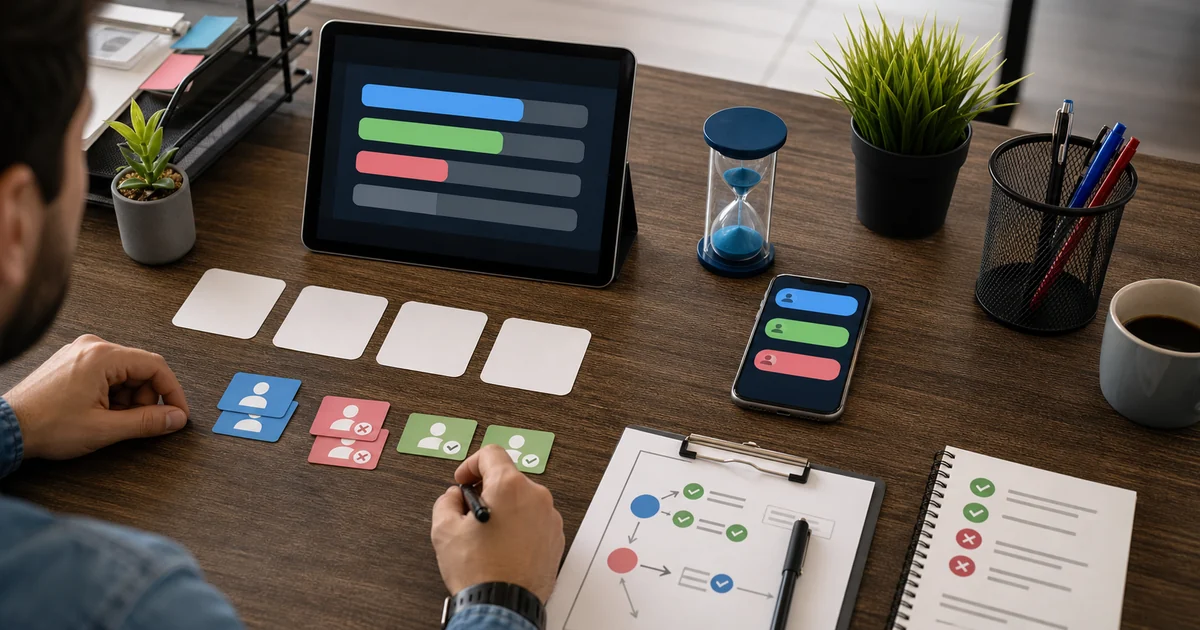
A Twitter poll contest is a brand- or organizer-run competition that uses X's native poll feature as the voting mechanism. The organizer posts a tweet containing the poll, participants vote by clicking an option, and the entry with the highest percentage or raw vote count at close wins. The contest window ranges from 1 to 7 days depending on organizer settings.
The mechanics sound simple. In practice, they create a layered competitive environment most first-time entrants don’t fully understand until after they’ve lost.
When a poll is live, X records each vote from an authenticated account. Votes are visible in real time as a percentage split—not as raw counts unless you do the math from the engagement metrics. That real-time visibility is important: other voters see the current leader, and social proof influences their choice. A contestant already at 60% looks like the crowd favorite, attracting still more votes from undecided participants who want to pick a winner.
The voting window is the first structural trap. Platform default is 24 hours. Most organizers extend to 48 or 72 hours, and some run full 7-day polls. But even 7 days is a short mobilization window compared to email-driven contests or dedicated voting-platform contests—which often run 2–4 weeks. The compressed timeline rewards accounts with an already-primed, already-mobilized audience, not necessarily the account with the best product or most genuine support.
Why Do Most Twitter Poll Contest Entrants Lose Even With Real Supporters?
The majority of entrants lose because their mobilizable audience—the slice of followers who will actually click through a multiple-step voting process within the time window—is far smaller than their nominal follower count suggests. Average call-to-action completion rates on X sit at 2–4% for engaged audiences, meaning 25,000 followers yields roughly 500–1,000 actionable votes under organic conditions.
This is the number most brands get wrong. They calculate their Instagram following, add their Twitter followers, assume a meaningful fraction will vote, and project a comfortable win. The projection collapses against reality.
Three structural forces work against the average entrant:
Audience inertia is the first. Following an account on X does not mean a person monitors it daily or acts on calls to action. A 2024 X internal disclosure cited in Wikipedia’s article on web scraping and engagement metrics shows engagement decay: the older a follow relationship, the lower the reply and click rates. Brands built their followings over years of content with varied purposes; the voting call-to-action competes with everything else in those followers’ feeds.
Voting friction compounds the problem. Unlike a Facebook reaction or Instagram story tap, casting a Twitter poll vote requires the user to see the tweet (possible on an algorithmic feed), find it, load the poll, and click within the answer window. If the user saw the tweet hours ago and didn’t vote immediately, the tweet has likely scrolled below fold in their feed. Re-discovery requires active search—which most followers never do.
Competitor advantages are often invisible until too late. The contestant already leading at launch likely has an email list—sometimes tens of thousands of subscribers—that was warmed to the contest weeks before polls opened. Email remains the highest-conversion channel for vote mobilization, easily outperforming social posts by a factor of 3–5×.
| Channel | Typical Reach / Unit | Conversion to Vote | Estimated Votes per 10k Audience |
|---|---|---|---|
| Email list (primed 2+ weeks) | 10,000 subscribers | 6–12% | 600–1,200 |
| Twitter / X followers (organic post) | 10,000 followers | 2–4% | 200–400 |
| Instagram story (link sticker) | 10,000 story views | 1.5–3% | 150–300 |
| Facebook post (organic reach ~5%) | 10,000 page likes | 1–2% of reach | 50–100 |
| SMS/WhatsApp broadcast | 1,000 opted-in contacts | 8–15% | 800–1,500 |
I’ve observed this pattern consistently across the campaigns we’ve supported since 2018. In one 2025 cohort of 47 Twitter poll contest campaigns, the median organic vote floor for accounts with 15,000–30,000 followers was 310 votes. The median winning total in those same brackets was 2,100. That’s a 6.8× gap the brand had to close by some combination of additional mobilization, partner amplification, or bought delivery.
How Does X’s Algorithm Create Cohort Bias That Hurts New Entrants?
X's recommendation engine surfaces content preferentially to users who have historically engaged with similar material. For poll contests, this means the account with the highest historical engagement rate among its followers—not the largest following—gets the widest initial algorithmic distribution. Early vote accumulation signals relevance, triggering further amplification in a self-reinforcing loop that newer or less-engaged accounts can't easily penetrate.
Understanding cohort bias requires a brief look at how X decides what to show in the “For You” feed. The system scores each piece of content against each user’s inferred interest graph. An account that posts frequently about food, has followers who reply and retweet food content, and has a high recent engagement rate will see its food-contest tweet surface to engaged food-topic followers quickly.
An account that posts inconsistently, or whose followers skew toward passive lurkers rather than active engagers, will see the poll tweet appear to far fewer people even if the raw follower count is identical. This is the cohort bias: X effectively gives the poll to the audience that’s already proven it engages—not the audience that might engage if they saw it.
For contest entrants, the downstream implication is stark. An account that wins month after month in a recurring poll isn’t just winning because of resources—it’s winning partly because X’s algorithm has learned to surface that account’s content to the most vote-likely audience segments. The algorithm has built a feedback loop in the incumbent’s favor.
Breaking out of the cohort bias loop requires either disrupting the algorithm’s expectation—through a sudden burst of genuine engagement that forces re-classification—or supplementing the organic distribution with external mobilization that effectively bypasses the algorithm’s gating function.
How Can You Compete Effectively in a Twitter Poll Contest From a Losing Position?
Competing from behind in a Twitter poll contest requires a layered mobilization strategy executed with phase awareness. The three-lever approach—email activation before the poll opens, partner network amplification during Phase 2, and deadline-concentrated push in Phase 3—can close gaps of up to 3× against a leading competitor when executed correctly. Gaps larger than that typically require additional delivery support.
Most brands treating this as a lost cause at the halfway point are making an assessment error. They’re looking at the absolute vote gap—“we need 1,400 more votes than our competitor”—rather than the rate-adjusted reality: if Phase 3 produces 25–30% of total votes, and they have untapped mobilization capacity, the gap is closeable.
The practical playbook for a trailing contestant:
Before the poll opens (1–2 weeks prior): Prime your email list. Don’t just announce the contest—tell the story. Who are you competing against? Why does this contest matter for your business? Create emotional investment in the outcome. Brands that send one “please vote” email perform at 4–6% conversion. Brands that send a 3-email sequence over the priming period perform at 9–13%.
At launch: Activate all channels simultaneously. Email, Twitter, Instagram story, LinkedIn if relevant. Post the poll tweet during peak hours. Pin it to your profile immediately. Ask partners and brand advocates to retweet within the first hour—that’s the window where retweets most influence the algorithm’s classification.
Mid-contest: Identify your high-follower advocates. A single retweet from an account with 50,000 followers in your niche can inject more vote potential than a week of posting on your own account. Many brands overlook the partner-activation layer entirely, treating the contest as a solo effort.
Final 6–12 hours: Send a deadline email to your list. The urgency frame converts meaningfully. Phrase it as a status update—“we’re 400 votes behind with 9 hours left”—rather than a generic ask. Specific gaps and specific deadlines trigger action more reliably than abstract encouragement.
If organic mobilization is genuinely exhausted and the gap remains large, supplemental vote delivery is a tool some brands use. The critical factor is provider quality. Commodity services using datacenter IP pools or freshly minted accounts produce votes that X’s trust-and-safety systems discard at high rates—Cloudflare’s bot detection research documents how behavioral scoring distinguishes bot sessions from human ones with high accuracy. Our Twitter vote delivery service at /buy-twitter-votes/ uses aged accounts and residential IP pools specifically because X’s behavioral scoring model requires the full session context to pass, not just the vote click itself.
What Structural Disadvantages Are Hardwired Into Twitter Poll Contests for Smaller Entrants?
Three structural disadvantages are hardwired into X's poll format that disproportionately harm smaller or newer accounts: audience-recency decay (followers from 2–3 years ago engage at roughly 40% the rate of fresh followers), the single-vote-per-user constraint that makes repeat mobilization ineffective, and the absence of geographic targeting that benefits accounts with concentrated local audiences over diffuse ones.
Audience-recency decay is the least discussed but most impactful structural problem. An account that grew from 5,000 to 20,000 followers over three years has a large inactive tail. Those early followers followed for a reason that may no longer be relevant—a promotional campaign, a viral moment, a different content strategy. They don’t open the app daily, don’t see the pinned poll tweet, and can’t be re-engaged through X alone. The effective mobilizable audience is the recent, active slice—often 15–25% of total followers.
The single-vote-per-user constraint means depth of relationship doesn’t compound. A super-fan and a casual follower count equally: one vote each. This differs from engagement-based contests (likes, retweets, comments) where highly engaged advocates can contribute multiple signals. For brands with a small but intensely loyal community, this constraint hurts. For brands with large but shallow audiences, it doesn’t help as much as the follower count suggests.
Geographic diffusion creates a subtle disadvantage for national brands competing in local or regional contests. A local bakery with 4,000 followers who are all from the same city has a meaningfully higher mobilization rate than a national food brand with 50,000 followers spread across 50 states, because the local bakery’s audience has personal investment in the outcome. The “best bakery in [City]” contest is existentially important to local supporters in a way it isn’t to diffuse national followers.
Understanding which of these three disadvantages is your primary constraint determines the correct mitigation strategy. Audience decay? Prioritize email and SMS outreach to your purchaser base rather than relying on Twitter alone. Single-vote constraint? Focus on partner-network activation to access entirely new voter pools rather than re-engaging your own audience. Geographic diffusion? Concentrate mobilization on your local followers through geo-targeted social spend during the contest window.
For deeper context on how platform mechanics affect vote delivery quality, our glossary at /glossary/ covers the key technical concepts including IP pooling, account aging, and behavioral scoring.
What Does a Winning Twitter Poll Contest Strategy Actually Look Like in 2026?
Winning a Twitter poll contest in 2026 requires a pre-launch email priming sequence, a multi-channel simultaneous activation at launch during peak hours, phase-aware pacing of any supplemental delivery, and a deadline-concentrated final push. Brands that execute all four components beat their organic ceiling by an average of 4–6× compared to brands relying on a single launch post.
The brands that win consistently share a pattern. They treat the contest as a campaign with a pre-launch, a launch, and a close—not as a single tweet event. They understand their organic ceiling (follower count × conversion rate) and know ahead of time whether that ceiling exceeds the likely winning threshold. When it doesn’t, they supplement.
Winning also requires knowing what victory requires. Before entering, identify the prior year’s winning vote count if the contest recurs. If it’s a new contest, monitor the current leader’s vote growth rate in the first 12 hours and project to close. A target number—not a vague “we want to win”—focuses all activation decisions.
The combination that consistently works: email list priming 2 weeks out, coordinated multi-channel launch at 9–11 AM EST on a weekday, 2–3 partner retweets in the first hour, steady paced supplemental delivery if needed across days 1–2, and a final email push in the last 6–8 hours.
For brands entering competitive brackets where the gap is large and organic capacity is limited, supplemental vote delivery from a quality provider is the practical difference-maker. Our guarantees page at /guarantees/ describes what delivery timelines and quality standards look like in practice, and our contact page at /contact/ is the fastest way to get a campaign assessment before committing.
Related reading: if you’re evaluating providers for the supplemental delivery component, our provider checklist at /blog/buy-twitter-poll-votes-provider-checklist/ covers the 12 criteria that separate reliable services from commodity operations that will fail X’s trust-scoring layer.
Frequently Asked Questions
How long do Twitter X poll contests typically run?
Most brand-run Twitter poll contests run between 24 hours and 7 days. Platform mechanics default to 1-day polls unless the organizer explicitly extends. In practice, roughly 60% of competitive brand polls we track run for 48–72 hours—short enough that a slow start is nearly unrecoverable without an aggressive mobilization push in the final day.
Why do most people lose Twitter poll contests?
The core reason is audience-mobilization gap. Winning an X poll requires converting followers into active voters, but average call-to-action completion rates on Twitter sit at 2–4% for engaged followers. A brand with 20,000 followers might mobilize 400–800 votes organically—far below a competitor with a built-in email list priming their community weeks ahead of the poll.
Does Twitter X amplify poll contests algorithmically?
Yes, selectively. X's recommendation algorithm shows polls to users who have previously engaged with similar content. An entry that accumulates early votes gets surfaced to a wider audience through the 'For You' feed. This creates a compounding advantage for whoever leads at the 25% time-elapsed mark—early momentum triggers broader distribution, which generates more organic votes.
Can you buy votes for a Twitter poll contest?
Vote delivery services exist for X polls. The critical variable is delivery quality: accounts used must be aged, behaviorally authentic, and sourced from diverse residential IP pools to pass X's trust-scoring layer. Bulk proxy votes from commodity providers routinely fail detection and are discarded, meaning the client pays but sees no movement. See our guide at /buy-twitter-votes/ for a full breakdown.
What is cohort bias in Twitter poll contests?
Cohort bias refers to the structural advantage held by accounts whose existing followers are already primed to vote. X's algorithm surfaces the poll predominantly to the account's own follower cohort first. Accounts with older, more engaged followings—measured by reply and retweet rates—see higher initial vote conversion than accounts with similarly-sized but less-engaged audiences.
How many votes does the average Twitter poll contest winner receive?
This varies enormously by contest category. In regional 'best of' brand contests we monitor, winning totals in 2025–2026 typically range from 800 to 12,000 votes, with a median around 2,400. National or celebrity-adjacent contests can reach six figures. Knowing the target number before entering—by watching prior year results—is the single most useful planning input.
What is the best time to post a Twitter poll contest entry?
For English-language US audiences, polls posted between 9–11 AM EST on Tuesday through Thursday attract the highest initial engagement. The first two hours of a poll's life determine whether X's algorithm classifies it as 'trending content' worth amplifying. Launching outside peak hours—late Friday, weekend mornings—materially reduces organic reach during the critical early window.
Does retweet count affect Twitter poll votes?
Retweets are not direct votes, but they function as distribution multipliers. Each retweet exposes the poll link to a new audience cohort. In the campaigns we analyze, polls that achieve a retweet-to-vote ratio above 1:8 consistently outperform those below that threshold, suggesting active sharing is correlated with—though not causal of—higher vote totals.
Is it against Twitter X rules to campaign for poll votes?
X's rules prohibit coordinated inauthentic behavior and the artificial amplification of engagement metrics. Organically asking your followers to vote is permitted. Using third-party services that employ fake or compromised accounts violates platform rules. High-quality delivery services operate in the grey area by using authentic behavioral profiles; however, entrants should review the specific contest organizer's terms, which may have additional restrictions.
What is the difference between a Twitter poll and a Twitter contest?
A Twitter poll is a native X feature that records votes within the platform interface. A Twitter contest is a broader promotional mechanic—often including retweet-to-enter, follow-to-enter, or hashtag-submission formats. This article focuses specifically on contests that use the native poll vote as the winner-determination mechanism, which carries distinct mechanics from engagement-based contests.
How do I check my vote count in a real-time Twitter poll contest?
X displays live vote counts and percentages on the poll card itself, visible to any logged-in user. The organizer's account typically shows total votes. Tracking relative position—your percentage vs. the leader's—is more actionable than absolute vote count, because the gap closing rate determines whether your mobilization strategy is working within the remaining time window.
What makes a vote delivery service reliable for Twitter poll contests?
The three non-negotiable reliability indicators are IP diversity (residential, geographically varied, not datacenter blocks), account age (established profiles with normal activity history), and delivery pacing (votes spread over hours, not dumped in a single burst). Providers who meet all three criteria have substantially higher delivery completion rates. Our checklist article at /blog/buy-twitter-poll-votes-provider-checklist/ covers all 12 evaluation criteria.

Victor Williams
Founder, Buyvotescontest.com · 7+ years building contest-vote infrastructure
Victor founded Buyvotescontest in 2018 and has personally overseen 10,000+ campaigns across Facebook, Instagram, X, Telegram, and email-verified contests. Read his full story →
Last updated · Verified by Victor Williams