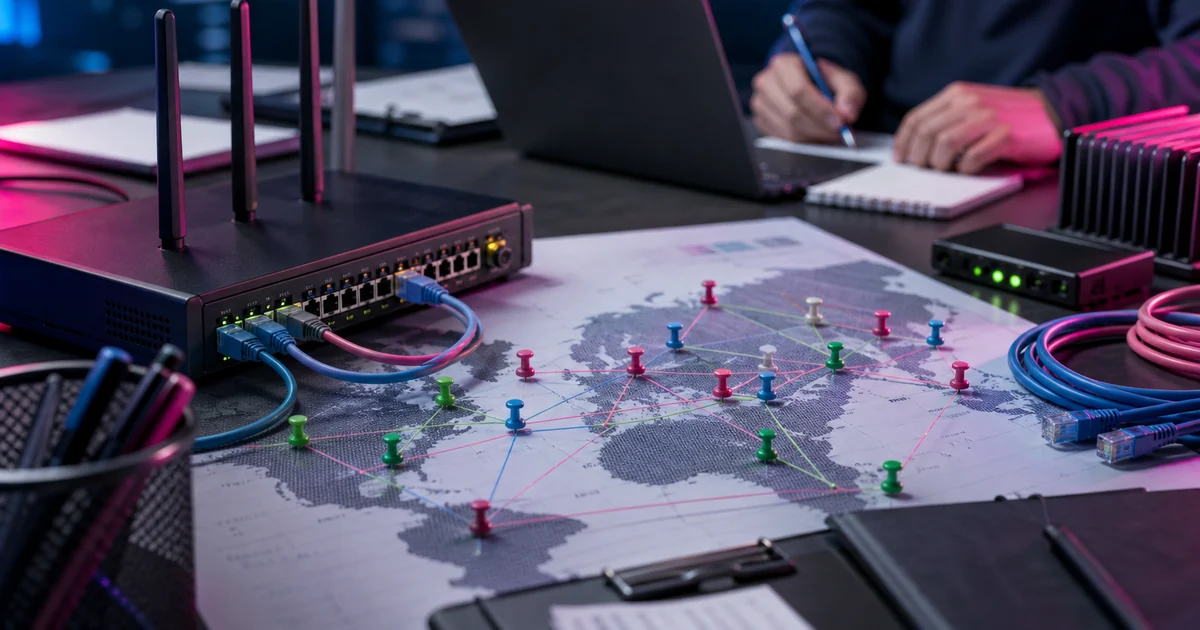
Introduction: Why ที่อยู่ไอพี Quality Is the Single Largest Factor in โหวต การส่งมอบ
When you ซื้อโหวต for an online ประกวด in 2026, the most important technical variable is not the number of โหวต you purchase — it is the quality of the ไอพี addresses those โหวต arrive from. A โหวต from a residential home router in Kansas is structurally different from a โหวต from a เซิร์ฟเวอร์ rack in a Frankfurt ข้อมูล centre, and ประกวด platforms are perfectly capable of telling the two apart. The difference is not subtle: one passes every detection filter and registers as a legitimate ballot; the other is silently discarded within milliseconds of arriving.
This guide is the definitive technical reference for understanding ไอพี โหวต — what they are, how detection systems evaluate them, what separates a ไอพีที่อยู่อาศัย from a mobile ไอพี from a datacenter address, and why none of that complexity needs to be your problem when you use a บริการ built on a pool of more than six million verified residential and mobile addresses. Whether you are entering a photography การแข่งขัน, a brand ambassador ประกวด, a public choice award, or a regional poll, the principles in this document apply equally.
The guide is structured in fourteen sections. Read sequentially for a complete picture, or jump directly to the section that answers your immediate question.
Section 1: What Is an ไอพี โหวต and How Does ไอพี-Based การยืนยัน Work?
An ไอพี โหวต is a โหวต cast in an online ประกวด where the แพลตฟอร์ม’s primary uniqueness-enforcement mechanism is the source ที่อยู่ไอพี of the HTTP request. Put simply: the ประกวด เซิร์ฟเวอร์ looks at the ไอพี that sent the ballot and decides whether to count it.
The Technical Mechanism
Every device that connects to the internet — a home computer, a smartphone, a smart TV — does so through an ที่อยู่ไอพี assigned to it by an Internet บริการ Provider. The Internet Protocol itself was defined in IETF RFC 791 (for IPv4) and IETF RFC 2460 (for IPv6). When your เบราวเซอร์ submits a โหวต, the HTTP request travels across the internet carrying your device’s ที่อยู่ไอพี in the TCP/ไอพี packet headers. The ประกวด แพลตฟอร์ม’s เซิร์ฟเวอร์ reads that address, checks it against a list of IPs that have already voted, and either accepts or rejects the การส่ง.
Why ไอพี-Only การยืนยัน Is Common
ไอพี-based โหวต การยืนยัน is the dominant mechanism for public contests precisely because it imposes no barrier on voters: there is no account to create, no อีเมล to verify, no แคปชา to solve. The แพลตฟอร์ม simply counts one โหวต per ที่อยู่ไอพี within a given time window. This frictionless design maximises participation but also makes the ประกวด vulnerable to โหวต manipulation — which is why sophisticated platforms layer additional checks on top of ไอพี การยืนยัน, and why ไอพี quality is so critical to การส่งมอบ success.
The Scope of ไอพี โหวต as a บริการ Category
In the โหวต-buying market, “ไอพี โหวต” specifically refers to the direct-โหวต-only บริการ tier: the buyer receives โหวต cast by real residential or mobile ไอพี addresses, no account creation is involved, no แคปชา solving is required on the buyer’s side, and the ประกวด must be configured to accept single-click or one-step ballot การส่ง. This is the fastest บริการ category — การส่งมอบ can begin within minutes of order placement — and typically the most affordable, because the การส่งมอบ infrastructure does not need to maintain เบราวเซอร์ เซสชัน state across multi-step registration flows.
For contests that require อีเมล การยืนยัน, social media login, or แคปชา completion, ไอพี โหวต are still the core component, but they must be paired with additional services. This pillar focuses exclusively on the ไอพี โหวต layer.
Section 2: Residential IPs — The Foundation of Legitimate โหวต การส่งมอบ
What Makes an ไอพี Residential?
A ไอพีที่อยู่อาศัย address is one that a Regional Internet Registry — ARIN for North America, RIPE NCC for Europe and the Middle East, APNIC for Asia-Pacific, LACNIC for Latin America, AFRINIC for Africa — has allocated to an Internet บริการ Provider specifically for assignment to end-user households. The defining characteristics are:
- The Autonomous System Number (ASN) that originates the ไอพี belongs to a consumer ISP, not a hosting company or commercial VPN provider.
- The reverse DNS (PTR) record, if present, typically contains residential ISP naming patterns (e.g., “cable-xxx.provider.net” or “dsl-xxx.city.provider.co.uk”).
- The ไอพี does not appear on commercial blocklists maintained by services such as Spamhaus DROP/EDROP or similar threat-intelligence databases.
- The ไอพี’s routing history in BGP tables shows long, stable association with a single consumer ISP ASN rather than the frequent re-announcement patterns typical of proxy-เครือข่าย recycled addresses.
The Three Residential Subtypes
Within the residential category, there are three meaningfully distinct subtypes that affect การส่งมอบ strategy:
Fixed-ไลน์ residential (cable, DSL, fibre): These are IPs assigned to home routers connected via physical infrastructure — cable television coaxial networks, DSL over copper phone lines, or modern fibre-to-the-home (FTTH) connections. They are typically stable: the same household keeps the same ไอพี (or a very slowly rotating one) for months or years. From a ประกวด แพลตฟอร์ม’s perspective, a โหวต from a fixed-ไลน์ ไอพีที่อยู่อาศัย has the highest possible legitimacy score.
Mobile carrier IPs (4G/5G): These addresses belong to mobile carrier ASNs — Verizon, AT&T, T-Mobile, Vodafone, Jio, China Mobile, and their regional equivalents globally. Mobile IPs have an important technical characteristic: Carrier-Grade NAT (CGNAT), defined in IETF RFC 6598, allows a single public IPv4 address to be shared across dozens or even hundreds of mobile subscribers simultaneously. This has two implications for โหวต การส่งมอบ. First, some ประกวด platforms have CGNAT-awareness and will accept multiple โหวต from a CGNAT ไอพี if they can verify the underlying subscribers differ by เซสชัน โทเค็น. Second, mobile IPs naturally rotate as subscribers connect and disconnect, producing an organic address-cycling pattern that detection systems recognise as legitimate.
Mobile IPs carry an additional advantage: 4G and 5G เครือข่าย addresses are geographically precise at the city level and update frequently as subscribers move. A voting campaign using mobile IPs produces exactly the kind of traffic pattern — scattered across carrier ranges, spread across city areas, arriving at the natural pace of human interaction — that ประกวด analytics expect to see during a genuine public engagement surge.
Shared Wi-Fi / institutional IPs: These are technically residential but involve shared infrastructure — university dormitories, apartment building networks, or community Wi-Fi. They behave similarly to fixed-ไลน์ residential IPs from a ประกวด แพลตฟอร์ม’s perspective, though the underlying ASN may differ slightly. Most professional โหวต การส่งมอบ services do not specifically target this subtype.
ISP Allocation and Why Residential Provenance Is Publicly Verifiable
The residential classification of an ที่อยู่ไอพี is not based on a private database or proprietary claim — it derives directly from publicly auditable registry records. ARIN maintains the WHOIS database for all ไอพี allocations in North America; RIPE NCC manages the RIPE Database covering Europe, the Middle East, and parts of Central Asia. Both registries publish the organisation name associated with every ไอพี block allocation. A block allocated to “Comcast Cable Communications” or “Deutsche Telekom AG” is verifiably residential in origin. A block allocated to “Amazon ข้อมูล Services” or “OVH SAS” is verifiably a datacenter allocation.
This public verifiability has a critical implication: it means that ไอพี classification is not a matter of proprietary algorithmic guesswork by ประกวด platforms. Any แพลตฟอร์ม that wants to distinguish residential from datacenter traffic can do so by querying publicly available registry ข้อมูล. This is an inexpensive, fast, and reliable operation — it requires nothing more than a WHOIS lookup or a query against a local mirror of the ARIN/RIPE databases. The threshold for performing this check is essentially zero, which means every serious ประกวด แพลตฟอร์ม either implements it directly or purchases a commercial บริการ that does it automatically.
Why Residential IPs Cannot Be Substituted
The question is sometimes asked: why not use any ที่อยู่ไอพี? The answer is that ไอพี classification is the first filter applied by every modern ประกวด การโกง-detection system, and non-residential addresses fail that filter before any other signal is evaluated. ประกวด platforms either maintain their own ไอพี classification databases or subscribe to commercial services that categorise every routable ที่อยู่ไอพี by type. An ไอพี from a datacenter, a VPN provider, or a commercial proxy เครือข่าย is identified and rejected in milliseconds — before the โหวต even reaches the uniqueness-check layer.
Section 3: Datacenter IPs — Why They Are Flagged Instantly
This section exists to explain what not to use. Understanding why datacenter IPs fail helps clarify why residential sourcing is not optional.
How Datacenter IPs Are Classified
A datacenter ไอพี belongs to an ASN registered to a hosting company, cloud provider, or commercial VPN infrastructure operator. The largest examples are Amazon Web Services (AS16509), Google Cloud (AS15169), Microsoft Azure (AS8075), Hetzner Online (AS24940), OVH (AS16276), Leaseweb (AS16265), and thousands of smaller colocation facilities worldwide. These ASNs are publicly listed in routing registries maintained by ARIN, RIPE NCC, and other Regional Internet Registries. Any ไอพี geolocation บริการ — MaxMind, IP2Location, ipinfo.io, or a ประกวด แพลตฟอร์ม’s own database — can identify a datacenter ASN with a simple registry lookup.
Beyond ASN classification, datacenter IPs are identified through additional signals:
- Reverse DNS patterns: AWS instances produce PTR records like
ec2-x-x-x-x.compute-1.amazonaws.com; DigitalOcean machines produce patterns likex.x.x.x.static.digital-ocean.com. These patterns are machine-identifiable and immediately flag the traffic as non-human. - Spamhaus blocklists: Spamhaus maintains the DROP (Don’t Route Or Peer) and EDROP (Extended Don’t Route Or Peer) lists, which enumerate ไอพี ranges associated with high-abuse hosting environments. Many ประกวด platforms subscribe to these lists and auto-reject any โหวต from a listed range.
- TLS fingerprinting: อัตโนมัติ HTTP clients running on datacenter infrastructure produce TLS ClientHello messages with distinctive cipher suite orderings and extension patterns that differ from mainstream เบราวเซอร์ TLS fingerprints. ประกวด platforms that inspect TLS can detect non-เบราวเซอร์ traffic regardless of the ไอพี type.
- User-agent and HTTP header analysis: Requests from datacenter อัตโนมัติ typically carry default or forged User-Agent strings and missing or anomalous HTTP headers (no Accept-Language, no Sec-CH-UA headers). Real browsers running on residential devices produce a specific, layered header set that is difficult to replicate perfectly.
The consequence is categorical: a โหวต arriving from a datacenter ไอพี is rejected. No quantity of datacenter IPs can substitute for a single genuine residential address, because the rejection is structural — it happens at the classification stage before any other factor is considered.
VPN and Proxy ASNs Are Treated the Same Way
Commercial VPN services and proxy networks are subject to the same ASN-level rejection as datacenter infrastructure. Providers such as Hola เครือข่าย (AS63949), Bright ข้อมูล (formerly Luminati, now operating under multiple ASNs), and consumer VPN brands operating their own เซิร์ฟเวอร์ infrastructure all maintain ASNs that appear on commercial threat databases. A โหวต routed through a Hola exit node or a Bright ข้อมูล residential-labeled address that has been previously flagged will fail the same classification filter that rejects datacenter traffic.
This is why ASN provenance — not just ไอพี type — matters so deeply. The safest โหวต การส่งมอบ pools source IPs from consumer ISPs that have never appeared in proxy or VPN infrastructure listings, and verify ASN assignment continuously because ไอพี blocks are sometimes sold and re-registered between providers.
Section 4: ASN Diversity — The Structural Requirement Beyond Individual ไอพี Quality
Even a pool of perfectly legitimate residential IPs can fail at scale if all those IPs belong to the same Autonomous System. ASN diversity is the distribution requirement that makes a โหวต campaign statistically consistent with organic traffic.
What an ASN Is
An Autonomous System Number is a globally unique identifier assigned by a Regional Internet Registry to a เครือข่าย operator that controls a distinct routing domain. Defined formally in IETF RFC 1930, an AS represents an independently managed เครือข่าย with its own routing policies. Comcast (AS7922), Charter/Spectrum (AS20115), Deutsche Telekom (AS3320), BT (AS2856), Jio Platforms (AS55836), and Telstra (AS1221) are all distinct ASNs, each representing a separate national carrier operating millions of residential endpoints. Cloudflare Radar publishes real-time per-ASN traffic statistics that illustrate the granularity of this segmentation.
When a device connects to the internet, every packet carries BGP routing metadata that allows any เซิร์ฟเวอร์ — including a ประกวด แพลตฟอร์ม — to identify the originating ASN in under a millisecond via a standard whois query or a pre-built ไอพี-to-ASN mapping database.
The Statistical Detection Problem
Consider a scenario: you purchase 1,000 โหวต, and all 1,000 originate from Comcast ASN 7922. Even if every individual ไอพี is genuinely residential and unique, the pattern is statistically impossible in organic ประกวด traffic. No real public ประกวด that is not hyper-local to a single ISP’s บริการ area attracts 1,000 consecutive voters from one cable provider. Detection algorithms that monitor per-ASN โหวต concentration will flag this pattern within the first few hundred โหวต.
Real organic surges look different. A genuine viral campaign produces โหวต from Comcast and Spectrum subscribers in the US, BT and Virgin Media users in the UK, Deutsche Telekom and Vodafone customers in Germany, Jio and Airtel subscribers in India, Telstra users in Australia, and dozens of smaller regional ISPs everywhere in between. The ASN distribution mirrors the natural heterogeneity of the internet.
How ประกวด Platforms Enforce ASN Limits
The detection mechanisms targeting ASN concentration include:
Per-ASN concentration scoring: The แพลตฟอร์ม calculates the percentage of incoming โหวต originating from each ASN within a rolling time window. If ASN X accounts for more than a threshold percentage (commonly 3–8% in well-defended systems) of โหวต in any window, subsequent โหวต from that ASN are paused or flagged. This catches concentrated deliveries even when individual IPs are completely unique.
Hosting-provider ASN blocklisting: ประกวด platforms maintain or subscribe to lists of ASNs associated with datacenters, commercial VPN services, and proxy networks. Any โหวต from a listed ASN is rejected before the per-ASN concentration check. This is why the ASN exclusion list in a quality โหวต การส่งมอบ บริการ is a live, continuously updated asset — not a static file.
ASN velocity analysis: Beyond concentration, platforms monitor the rate at which โหวต arrive from specific ASNs. If โหวต from a given ASN arrive faster than human browsing patterns allow — faster than a person could load a page, read it, and click a โหวต button — the velocity triggers an anomaly flag. Per-ASN rate pacing is therefore as important as per-ASN diversity.
Cross-แพลตฟอร์ม correlation: Shared การโกง-intelligence databases allow platforms operating on the same infrastructure or industry consortium to correlate ASN patterns across multiple contests. An ASN that repeatedly appears in การโกง submissions on one แพลตฟอร์ม gets elevated suspicion scoring on all connected platforms.
How BGP Routing ข้อมูล Enables Per-ASN Detection
Every ไอพี packet on the internet carries routing information derived from BGP (Border Gateway Protocol), the routing protocol that connects the world’s Autonomous Systems. BGP route announcements are publicly visible through services like RIPE NCC’s RIS (Routing Information บริการ) and the RouteViews project, and through commercial services like Cloudflare Radar’s ASN ข้อมูล. Any ที่อยู่ไอพี can be mapped to its originating ASN in milliseconds using a pre-built local lookup table derived from BGP route ข้อมูล — no external เอพีไอ call required at โหวต-check time.
ประกวด platforms that want to apply per-ASN rate limits need only maintain a local copy of the BGP-to-ASN mapping (which is updated approximately every 5 minutes by RIPE NCC and RouteViews) and increment a per-ASN counter for each incoming โหวต. The computational overhead is trivial. This is not a hypothetical future capability — it is a straightforward engineering implementation that any developer with basic networking knowledge can build in an afternoon. The question is not whether ประกวด platforms can perform ASN-level detection; it is whether they have chosen to implement it. Increasingly, they have.
The Minimum Diversity Standard
For a โหวต campaign to be statistically safe, a minimum of 20–30 distinct ASNs should be represented in any order of 500 or more โหวต. For orders above 5,000 โหวต, representing 50+ distinct ASNs is the operational standard. Our การส่งมอบ infrastructure enforces hard per-ASN caps and automatically sources from hundreds of distinct networks, so this standard is met by default without any manual configuration from the buyer.
Section 5: Geo-Targeting — Country, Region, and City-Level Precision
Most online contests are not neutral about where voters come from. A local business การแข่งขัน wants โหวต from residents of its city. A national brand ambassador ประกวด requires โหวต from within the target country. A regional poll may penalise foreign โหวต entirely. Geo-targeting is therefore not a premium add-on — it is a core การส่งมอบ parameter.
How Geo-Targeting Works Technically
ประกวด platforms that enforce geographic restrictions use ไอพี geolocation databases to map each incoming โหวต’s source ไอพี to a country, region (state/province), or city. The major providers of these databases include MaxMind GeoIP2, IP2Location, ipinfo.io, and db-ไอพี.com. Each database maps ไอพี ranges to geographic coordinates and administrative regions based on a combination of registry records, BGP routing announcements, and direct เครือข่าย measurement.
The accuracy of these databases varies by geographic granularity:
- Country-level accuracy is extremely high — typically 99%+ for major databases. If a ประกวด requires in-country โหวต, using IPs from the wrong country will fail at country-level geolocation with high reliability.
- Region/state-level accuracy is typically 80–90%. Most IPs can be reliably mapped to the correct state or province, though edge cases near regional boundaries introduce some uncertainty.
- City-level accuracy varies widely — typically 60–80% — because ไอพี allocation blocks do not always correspond cleanly to municipal boundaries. Mobile carrier IPs are often more precisely located at the city level than fixed-ไลน์ residential IPs, because carrier เครือข่าย infrastructure is organised around serving specific urban areas.
Why Geo-Targeting Failures Are Costly
A โหวต campaign where 30% of โหวต arrive from the wrong country does not merely underperform — it may cause the ประกวด แพลตฟอร์ม to audit the entire โหวต set. A sudden influx of foreign โหวต into a ประกวด designed for a specific market is itself an anomaly signal. Detection systems look for geographic clustering that deviates from expected traffic patterns for the ประกวด’s audience.
This is why professional โหวต การส่งมอบ services maintain geo-segmented pools: not merely “global” residential IPs, but verified residential IPs that are correctly geolocated to specific countries, and where possible, specific metropolitan areas. Our pool of 6M+ residential and mobile addresses is segmented across 200+ countries with country-level การส่งมอบ guarantees.
City-Level Targeting and Mobile ไอพี Precision
For contests that require โหวต from a specific city — “most popular business in Austin,” “best restaurant in Manchester,” “favourite artist from Seoul” — mobile carrier IPs offer structural advantages. Mobile networks are architected around serving specific geographic markets, and the ไอพี ranges assigned to carrier nodes in a given city are reliably geolocated to that city by major geolocation databases. This makes mobile IPs the preferred source for city-level targeting when precision is critical.
Fixed-ไลน์ residential IPs can also be targeted at the city level, but the reliability is somewhat lower because ISP allocation blocks sometimes span wide geographic areas (e.g., a single Comcast CIDR block might cover multiple adjacent cities).
Section 6: IPv4 vs IPv6 — Handling Both Protocol Generations
The internet is in the middle of a decades-long transition from IPv4 to IPv6. In 2026, most ประกวด platforms support both protocols, but the handling of each differs in ways that affect โหวต การส่งมอบ strategy.
IPv4: The Legacy Standard
IPv4, defined in IETF RFC 791, uses 32-bit addresses in the familiar dotted-decimal notation (e.g., 203.0.113.47). The IPv4 address space is mathematically limited to approximately 4.3 billion addresses. ARIN announced exhaustion of its IPv4 free pool in 2015; RIPE NCC followed in 2019. This scarcity drives the commercial value of residential IPv4 addresses: they are a finite resource, and a pool of 6 million verified residential IPv4 addresses represents a significant infrastructure investment.
For โหวต การส่งมอบ, IPv4 is still the dominant protocol. The vast majority of ประกวด platforms run IPv4 as their primary stack. IPv4 uniqueness checking is well understood by platforms, and per-ไอพี โหวต limiting is enforced cleanly.
IPv6: The Growing Presence
IPv6, defined in IETF RFC 2460, uses 128-bit addresses in hexadecimal notation (e.g., 2001:db8::1). The address space is effectively unlimited — there are more IPv6 addresses than atoms in the observable universe. IPv6 adoption has accelerated significantly with the growth of mobile broadband: T-Mobile US, for example, runs its LTE เครือข่าย predominantly on IPv6. ISPs deploying CGNAT for IPv4 often push subscribers to IPv6 for direct addressing.
The critical difference for โหวต campaigns is how platforms implement IPv6 uniqueness checking. Because IPv6 address space is so vast, platforms cannot simply block individual /128 addresses (equivalent to a single device). Instead, they apply prefix-level blocking: a /64 prefix (which contains 18 quintillion addresses) is treated as a single voter entity, because all the addresses in a /64 prefix typically belong to a single subscriber. Some platforms use /48 or even /56 prefix blocking as their uniqueness boundary.
This means IPv6 โหวต การส่งมอบ requires a pool of genuinely diverse /64 prefixes — not just diverse individual addresses — to avoid subnet-level rejection. A provider that claims “millions of IPv6 addresses” but draws from a small number of /48 prefixes cannot deliver genuine IPv6 uniqueness.
Contests That Check Both
Some ประกวด platforms — particularly those with sophisticated การโกง detection built on commercial anti-abuse infrastructure — actively request both the IPv4 and IPv6 addresses of a connecting client simultaneously, using techniques like RFC 7239 (Forwarded headers) or dual-stack address collection. For these platforms, a โหวต เซสชัน that reveals an inconsistency between the IPv4 and IPv6 paths may be flagged. This is related to the WebRTC leak problem discussed in the next section. Professional การส่งมอบ on dual-stack platforms requires that both address families originate from the same residential ISP assignment.
Practical Recommendation
For the vast majority of contests encountered in 2026, IPv4 residential addresses remain sufficient and are the standard การส่งมอบ mechanism. IPv6 sourcing becomes specifically relevant for contests that:
- Explicitly require or detect IPv6 (less common but growing).
- Are hosted on platforms that collect dual-stack connection ข้อมูล.
- Target markets where mobile-carrier IPv6 penetration is extremely high (several Asian and North American carriers).
Our การส่งมอบ engine handles both IPv4 and IPv6 transparently, selecting the appropriate protocol family based on the target แพลตฟอร์ม’s detection profile.
Section 7: WebRTC Leak Prevention — The เบราวเซอร์ เอพีไอ That Can Reveal Real IPs
WebRTC is the most technically sophisticated detection vector in the ไอพี โหวต context, and it is the one most commonly overlooked by lower-quality บริการ providers.
What WebRTC Is
Web Real-Time Communication (WebRTC) is a เบราวเซอร์-native เอพีไอ standardised in IETF RFC 8825 that enables peer-to-peer audio, video, and ข้อมูล channels directly between browsers without requiring a plugin or เซิร์ฟเวอร์ relay. It is the technology underlying video call products like Google Meet, เบราวเซอร์-based gaming, and file-transfer tools. Most consumer-facing browsers — Chrome, Firefox, Safari, Edge — include full WebRTC support by default.
The ICE Candidate Mechanism and ไอพี Leakage
To establish peer-to-peer connections, WebRTC uses the Interactive Connectivity Establishment (ICE) protocol, whose signalling format is defined in IETF RFC 8839. The ICE process requires each เบราวเซอร์ to gather a list of ICE candidates — all the เครือข่าย paths through which it might be reachable. This includes local เครือข่าย addresses and, critically, the real public ที่อยู่ไอพี of the device. The process involves contacting STUN (เซสชัน Traversal Utilities for NAT) servers, which report the device’s external ที่อยู่ไอพี regardless of whether that device is behind a VPN, proxy, or NAT layer.
The dangerous property from a โหวต การส่งมอบ perspective is that a ประกวด page can execute a silent WebRTC RTCPeerConnection call with minimal JavaScript — no user gesture required, no visible interface element — and receive the true ที่อยู่ไอพี of the connecting device in the ICE candidate strings. This happens even if the โหวต is nominally delivered through a proxy or VPN: the WebRTC stack bypasses the proxy’s routing and contacts STUN servers directly over UDP.
How ประกวด Platforms Use This
A well-engineered ประกวด การโกง detection system can embed a silent WebRTC probe in the voting page:
- The page loads. Invisible JavaScript initiates an
RTCPeerConnectionwith a public STUN เซิร์ฟเวอร์. - ICE candidate events fire, revealing the device’s true public ที่อยู่ไอพี.
- The back-end compares the WebRTC-revealed ไอพี against the HTTP request’s source ไอพี.
- If the two IPs differ — indicating the HTTP traffic is being routed through a proxy while the WebRTC traffic exposes the real underlying address — a mismatch is recorded.
- The mismatch elevates the การโกง score for that โหวต การส่ง, potentially causing it to be flagged or discarded.
This is not hypothetical. ICE candidate leakage is a documented เบราวเซอร์ behaviour, and the candidate string format specified in RFC 8839 §5.1 contains ที่อยู่ไอพี, port, and transport type in plaintext. Any ประกวด แพลตฟอร์ม using even basic เบราวเซอร์-side JavaScript can implement this detection.
How Professional การส่งมอบ Avoids WebRTC Leaks
Preventing WebRTC leaks in a โหวต การส่งมอบ context requires that the browsing environment itself — not just the routing layer — be isolated from the underlying infrastructure. There are two approaches:
เบราวเซอร์-level WebRTC control: Firefox allows WebRTC to be disabled entirely via media.peerconnection.enabled = false. Chromium-based browsers can be launched with flags that replace real IPs with mDNS .local hostnames (#enable-webrtc-hide-local-ips-with-mdns). Brave เบราวเซอร์ disables WebRTC by default in Fingerprinting Protection mode. A การส่งมอบ system that uses real เบราวเซอร์ instances (rather than headless HTTP clients) must configure these controls at the เบราวเซอร์ profile level.
Source ไอพี consistency: The most robust approach is to ensure that the browsing เซสชัน’s true source ไอพี is the same ไอพีที่อยู่อาศัย being used for the HTTP connection — eliminating any delta between the WebRTC-revealed address and the HTTP source address. This requires genuine ไอพีที่อยู่อาศัย assignment at the operating system level (true residential proxy routing), not a thin HTTP proxy layer that routes only HTTP/HTTPS traffic while leaving UDP/WebRTC unaffected.
Our การส่งมอบ infrastructure routes โหวต sessions at the OS เครือข่าย level, ensuring WebRTC traffic and HTTP traffic exit through the same ไอพีที่อยู่อาศัย. There is no underlying datacenter ไอพี to leak.
Section 8: Rate Limiting and Pacing — Avoiding Subnet Spikes
Even with perfect ไอพี quality, การส่งมอบ timing can trigger detection. Rate limiting is the temporal dimension of โหวต safety.
How Platforms Implement Rate Limiting
ประกวด การโกง detection systems apply rate limits at multiple granularities simultaneously:
Per-ไอพี rate limits: A single ไอพี may not submit more than one โหวต per ประกวด, enforced at the เซสชัน level. This is the basic uniqueness check. Professional การส่งมอบ satisfies this trivially by never reusing an ไอพี.
Per-/24 subnet rate limits: This is the more nuanced control. A /24 เครือข่าย (e.g., 203.0.113.0 to 203.0.113.255) contains 256 ไอพี addresses that typically belong to the same ISP block in the same geographic area. If 50 โหวต arrive from different IPs within the same /24 in ten minutes, the แพลตฟอร์ม may flag the entire subnet as a coordinated campaign. Real organic traffic spreads across many /24 subnets; concentrated การส่งมอบ within a single /24 is a statistical anomaly.
Per-region velocity limits: Some platforms monitor the rate of โหวต arrivals from specific geographic areas — city, state, or country. A sudden spike of 200 โหวต from the same mid-sized city in a 30-minute window is suspicious when the ประกวด’s normal traffic rate is 10 โหวต per hour from that city.
Temporal velocity limits: Platforms monitor the total incoming โหวต rate and flag anomalous surges. An organic ประกวด receiving 50 โหวต per day does not receive 5,000 โหวต in a single hour unless a major media mention occurred. Absent such a contextual explainer, a sudden rate spike triggers a manual review.
The Pacing Strategy
Professional โหวต การส่งมอบ implements a การส่งมอบ rate schedule — often called a “drip-feed” — that spreads โหวต across a realistic time window. The parameters of an effective pacing strategy include:
Per-/24 ceiling: No single /24 subnet contributes more than 2–3 โหวต per hour regardless of pool depth. This prevents subnet concentration flagging.
Inter-โหวต interval: The time gap between successive โหวต is randomised within a realistic range — typically 8 to 45 seconds for direct-โหวต services — mimicking the dwell time of a real person landing on a page, reading it, and clicking the โหวต button.
Diurnal distribution: โหวต are not delivered uniformly around the clock. Real voters are human beings who are awake during daylight hours in their time zone. การส่งมอบ schedules that weight โหวต toward local daytime hours (6 AM to 11 PM in the target region) produce traffic patterns that match expected human behaviour.
Burst avoidance: No more than a configurable percentage of the total order is delivered in any single hour. A standard safe การส่งมอบ rate for large orders (1,000+) is 5–10% of total โหวต per hour, with the remainder spread across subsequent hours.
Our การส่งมอบ engine implements all four pacing parameters automatically. Buyers specify the total order and target completion window; the engine schedules การส่งมอบ within those constraints using the parameters above.
Section 9: Known VPN ASN Blocklisting — What Gets Flagged and Why
Understanding which specific เครือข่าย categories trigger automatic rejection helps buyers understand why provider claims of “residential” IPs sometimes fail in practice.
Commercial VPN Provider Infrastructure
Consumer VPN brands — NordVPN, ExpressVPN, Surfshark, PureVPN, and dozens of others — operate their own เซิร์ฟเวอร์ infrastructure assigned to dedicated ASNs. These ASNs are publicly listed and widely distributed in threat-intelligence databases. Any โหวต routed through a NordVPN exit node arrives from a well-known VPN ASN and is rejected regardless of the VPN’s marketing claim that it provides “anonymity.” The ASN is the identifier, not the brand name.
Peer-to-Peer Residential Proxy Networks
A more complicated category is peer-to-peer residential proxy networks, which recruit consumer devices as exit nodes (sometimes with disclosed consent, sometimes through adware). Providers in this category have historically included Hola (now Bright ข้อมูล / Luminati), and similar networks. These services do technically provide ไอพีที่อยู่อาศัย addresses — the exit nodes are real consumer devices — but the ASNs associated with the เครือข่าย management infrastructure, or the specific ไอพี ranges flagged through prior abuse reports, may appear on threat databases.
More critically, the ไอพี addresses recruited through peer-to-peer networks are often shared across thousands of customers simultaneously. The same ไอพีที่อยู่อาศัย that one customer is using for โหวต การส่งมอบ might simultaneously be used by another customer for a different purpose — including activity that generates abuse reports. An ไอพี that has been used for spam, credential stuffing, or บอท activity in the last 30 days carries elevated reputation scores in threat databases, regardless of its nominal residential classification.
This is why ไอพี provenance — not just type — determines quality. A ไอพีที่อยู่อาศัย from a verified, clean residential source that has never appeared in an abuse database is categorically safer than a ไอพีที่อยู่อาศัย sourced from a peer-to-peer เครือข่าย with mixed use history.
Mobile Carrier Ranges and CGNAT Addresses
Mobile carrier ไอพี ranges are generally not blocklisted at the ASN level, because blocking entire carrier ASNs would prevent legitimate mobile users from voting. However, platforms that are CGNAT-aware may apply special rules to addresses in the IETF RFC 6598 shared address space (100.64.0.0/10), which is reserved for carrier-grade NAT infrastructure. โหวต from CGNAT addresses may require เซสชัน-โทเค็น validation rather than pure ไอพี-level uniqueness, depending on the แพลตฟอร์ม’s implementation.
Our การส่งมอบ engine handles CGNAT addresses at the เซสชัน level, ensuring uniqueness is maintained through เซสชัน โทเค็น tracking in addition to ที่อยู่ไอพี tracking.
The Blocklist Maintenance Imperative
For any ไอพีที่อยู่อาศัย pool to remain effective, its operator must maintain continuous blocklist monitoring:
- Spamhaus DROP and EDROP lists are updated daily and cover the most egregious abuse ranges.
- Commercial threat databases (IBM X-Force, Recorded Future, etc.) update in near-real-time with new abuse reports.
- Individual ประกวด platforms maintain proprietary blocklists from prior การโกง investigations that are not public.
Our operations team runs daily อัตโนมัติ การยืนยัน of the active pool against all major public blocklists and removes any address or /24 block that has been newly listed. This prevents clean-at-time-of-purchase addresses from degrading in quality over the การส่งมอบ window of a campaign.
Section 10: The Direct-โหวต-Only บริการ Model — Speed, Simplicity, and Cost
ไอพี โหวต occupy a specific and well-defined position in the โหวต บริการ taxonomy: they are the fastest, simplest, and typically most affordable บริการ type because they operate exclusively on contests where no additional การยืนยัน is required beyond ไอพี-level uniqueness.
What Direct-โหวต-Only Means
In a direct-โหวต ประกวด, the flow is:
- The user navigates to the ประกวด page.
- The user clicks a โหวต button (or submits a simple แบบฟอร์ม).
- The แพลตฟอร์ม records the โหวต if the ที่อยู่ไอพี is new.
- No account creation, no อีเมล การยืนยัน, no social media login, no แคปชา.
For these contests, the การส่งมอบ requirement is simply: send one HTTP request from a unique ไอพีที่อยู่อาศัย per โหวต. The เบราวเซอร์ เซสชัน does not need to maintain persistent cookies, does not need to store a logged-in account state, and does not need to solve any interactive challenge. This means การส่งมอบ can be executed at high throughput with minimal per-โหวต infrastructure overhead.
The combination of simple execution and a large residential pool makes ไอพี โหวต the most cost-effective โหวต type for qualifying contests. A buyer who needs 5,000 โหวต on a direct-โหวต แพลตฟอร์ม can receive them in hours, not days, at a price point significantly below services that require full account-based การส่งมอบ.
When ไอพี โหวต Are the Right Choice
ไอพี โหวต are the correct บริการ choice when:
- The ประกวด explicitly counts one โหวต per ที่อยู่ไอพี (visible in the ประกวด rules or verifiable through a test การส่ง).
- The ประกวด does not require account login, อีเมล การยืนยัน, or social media การตรวจสอบสิทธิ.
- The ประกวด does not require แคปชา completion (or uses a แคปชา that can be bypassed through เบราวเซอร์-resident solutions at the เซสชัน level).
- The buyer needs rapid การส่งมอบ — ไอพี โหวต can begin within minutes of order confirmation.
- The buyer needs a high โหวต count at the lowest unit cost.
When ไอพี โหวต Are Not Sufficient
ไอพี โหวต are not the right solution for contests that require:
- อีเมล-verified account creation per โหวต.
- Social media login (เฟสบุ๊ก, อินสตาแกรม, ทวิตเตอร์/X) with aged accounts.
- Complex แคปชา challenges (รีแคปชา v3, เอชแคปชา, Arkose FunCAPTCHA).
- Mobile SMS การยืนยัน per โหวต.
- Geographic การยืนยัน through physical address confirmation.
For these ประกวด types, ไอพี โหวต are still a component of การส่งมอบ, but they must be paired with account, อีเมล, or แคปชา services. Our บริการ catalogue covers all these tiers; this pillar focuses on the ไอพี-only layer.
Section 11: Our 6M ไอพีที่อยู่อาศัย Pool — Technical Architecture
The claim of a “six million ไอพีที่อยู่อาศัย pool” requires unpacking. Understanding what that means operationally helps buyers evaluate whether the underlying infrastructure can actually deliver the โหวต they need.
Pool Composition
Our pool of 6M+ active residential and mobile ไอพี addresses is composed of:
- Fixed-ไลน์ residential: Cable, DSL, and fibre-to-the-home addresses sourced from ISPs across North America, Europe, Asia-Pacific, Latin America, Africa, and the Middle East. The largest national ISPs on all major continents are represented.
- Mobile carrier (4G/5G): Addresses from LTE and 5G NR networks, sourced from carrier nodes in 150+ countries. Mobile addresses account for approximately 35% of the active pool, providing the natural rotation and geographic precision advantages described in Section 5.
- Excluded categories: Datacenter IPs, commercial VPN provider IPs, Tor exit nodes, known proxy เครือข่าย addresses, and IPs with recent Spamhaus or equivalent blocklist appearances are excluded from the pool and verified daily.
Geographic Distribution
The pool is geo-segmented to support country-level targeting with country-level การส่งมอบ guarantees. The 40 highest-demand countries for ประกวด voting — the United States, United Kingdom, Canada, Australia, Germany, France, India, Brazil, Philippines, Indonesia, and 30 others — each have dedicated pool segments with minimum depth guarantees. Smaller markets are served from the global pool with best-effort country-level matching.
Per-ASN Enforcement
Our การส่งมอบ infrastructure enforces per-ASN caps at order build time. When an order is queued, the selection algorithm draws from the pool in a way that:
- No single ASN contributes more than a configurable ceiling percentage of the order (default: 3% for orders above 500 โหวต).
- The minimum number of distinct ASNs represented in any order above 500 โหวต is 30.
- ASNs on the hosting-provider and VPN-provider exclusion list are filtered out before selection begins.
These parameters can be adjusted for specialised campaigns (e.g., a local ประกวด where concentration in a specific regional ISP is both expected and appropriate), but the defaults are calibrated for the general case.
Pool Freshness and Reputation Maintenance
The pool is not static. Approximately 5–8% of addresses turn over monthly as ISPs reassign blocks, as addresses accumulate abuse history, or as new residential ranges are added. Our อัตโนมัติ maintenance pipeline:
- Checks every address in the pool against major public blocklists on a 24-hour cycle.
- Removes addresses that have been re-registered to non-residential ASNs (as happens occasionally when ISP blocks are sold to hosting companies).
- Adds newly available residential ranges as ISPs expand their consumer address assignments.
- Enforces per-address cooling periods after use in any campaign, so addresses recover reputation between deployments.
This maintenance discipline is what makes a large pool a genuinely high-quality pool rather than a large repository of degraded addresses.
การส่งมอบ เซสชัน Architecture
ไอพีที่อยู่อาศัย sourcing is necessary but not sufficient on its own. The full การส่งมอบ เซสชัน must mirror what a real consumer device produces when visiting a ประกวด page. This requires attention to five additional layers beyond the ที่อยู่ไอพี itself:
TLS ลายนิ้วมือ consistency: Modern TLS implementations produce a ClientHello message with a specific ordering of cipher suites and TLS extensions. Real browsers (Chrome, Firefox, Safari) produce distinctive, well-documented fingerprints. อัตโนมัติ HTTP libraries like Python’s requests, Node.js fetch, or Go’s net/http produce different fingerprints that Cloudflare and other WAF layers recognise as non-เบราวเซอร์. Our การส่งมอบ infrastructure uses genuine เบราวเซอร์ engines — not HTTP libraries — so TLS fingerprints match real browsers exactly.
HTTP header set: A real Chrome เบราวเซอร์ visiting a page produces a specific ordered set of HTTP headers: User-Agent, Accept, Accept-Language, Accept-Encoding, Sec-Fetch-Site, Sec-Fetch-Mode, Sec-Fetch-Dest, Sec-CH-UA, Sec-CH-UA-Mobile, Sec-CH-UA-แพลตฟอร์ม, and others. Missing or anomalously ordered headers are a บอท detection signal. Our เบราวเซอร์ sessions produce the complete, correctly ordered header set matching the stated เบราวเซอร์ version.
JavaScript execution depth: ประกวด การโกง detection increasingly uses JavaScript-based เบราวเซอร์ challenges — not full แคปชา puzzles, but passive checks that verify the เบราวเซอร์ can execute JavaScript, access the DOM, respond to timing functions, and produce realistic scroll and click coordinates. A headless เบราวเซอร์ environment that does not render the full page visually may fail these passive checks. Our การส่งมอบ environment fully renders pages and executes all JavaScript before submitting the โหวต action.
Cookie and เซสชัน state: Real browsers accumulate cookies over browsing sessions. A เซสชัน that arrives at a ประกวด page with zero prior cookie state may score slightly lower on passive risk assessments than one carrying typical เบราวเซอร์ cookie history. Our การส่งมอบ sessions are pre-warmed with typical consumer browsing cookies before navigating to the ประกวด URL.
Mouse movement and interaction timing: Passive behavioural biometrics — how mouse coordinates move across the page, how long the cursor dwells on the โหวต button before clicking, how quickly the click completes — are increasingly captured by การโกง detection JavaScript. Real humans move cursors in curved, slightly irregular paths with variable velocity. Our interaction simulation produces randomised, human-like cursor trajectories and dwell times rather than the perfectly linear movements typical of simple อัตโนมัติ.
These five layers, combined with the ไอพีที่อยู่อาศัย sourcing, ASN diversity, and rate pacing described in earlier sections, produce โหวต การส่งมอบ sessions that are structurally indistinguishable from มนุษย์จริง engagement at every detection layer simultaneously.
Section 12: The Detection Landscape in 2026 — What ประกวด Platforms Are Doing
Understanding how detection has evolved in 2026 helps buyers understand why quality requirements have tightened and why the ไอพี โหวต market has consolidated around providers with serious residential infrastructure.
Cloudflare บอท Management and ไอพีที่อยู่อาศัย Transparency
Cloudflare, which processes a significant share of web traffic globally (as tracked in Cloudflare Radar), has evolved its บอท Management product to include ไอพีที่อยู่อาศัย classification. Cloudflare’s threat intelligence distinguishes between:
- Verified humans (real browsers with full JavaScript execution, TLS fingerprints matching known เบราวเซอร์ versions, and resident ไอพี addresses).
- อัตโนมัติ (headless browsers, raw HTTP clients, or sessions exhibiting บอท-like timing patterns, regardless of ไอพี type).
- Likely human (sessions that pass most checks but show some anomalies).
A ประกวด แพลตฟอร์ม protected by Cloudflare บอท Management does not simply check the ไอพี type — it evaluates the full request profile: ไอพี type, ASN classification, TLS ลายนิ้วมือ, HTTP header set, JavaScript execution depth, ลายนิ้วมือเบราวเซอร์, and behavioural timing. A genuine ไอพีที่อยู่อาศัย accessing the ประกวด through a headless เบราวเซอร์ configured poorly will still be classified as “อัตโนมัติ” by this system.
This is why โหวต การส่งมอบ in 2026 increasingly requires not just ไอพีที่อยู่อาศัย sourcing but a full end-to-end approach where the การส่งมอบ เซสชัน looks like a real consumer browsing เซสชัน in every dimension — ไอพี, ลายนิ้วมือเบราวเซอร์, TLS profile, and behavioural timing simultaneously.
รีแคปชา v3 and Invisible CAPTCHAs
Google’s รีแคปชา v3 generates a continuous risk score (0.0 to 1.0) for every page interaction without presenting any visible challenge to the user. The score is derived from:
- ไอพี reputation (residential vs. datacenter, abuse history).
- ลายนิ้วมือเบราวเซอร์ (matching known Chrome/Firefox versions, consistent with stated User-Agent).
- Behavioural signals (mouse movement patterns, scroll behaviour, time on page).
- Google account context (logged-in users with long account history score higher).
Contests that use รีแคปชา v3 threshold gating (e.g., “only count โหวต with score > 0.7”) require that the โหวต เซสชัน produce a high รีแคปชา score. This is achievable with genuine residential IPs delivered through realistic เบราวเซอร์ sessions, but it requires infrastructure investment that separates serious providers from low-quality alternatives.
Database-Backed ไอพี Reputation Services
Commercial การโกง-scoring platforms used by enterprise ประกวด operators — including services that aggregate abuse reports across industries — have expanded their ไอพีที่อยู่อาศัย classification capabilities. In 2026, a ไอพีที่อยู่อาศัย that has been used extensively in โหวต campaigns over the previous 12 months may carry an elevated “บอท likelihood” score in these databases, even if the ไอพี is genuinely residential, because its historical behaviour pattern (voting on many different ประกวด platforms) deviates from the baseline for that ISP and geographic area.
This is why pool depth matters: a pool of 6 million addresses experiences vastly lower per-address utilisation rates than a pool of 100,000 addresses. The resulting per-address reputation remains within the “normal residential usage” baseline.
แพลตฟอร์ม-Specific Detection Profiles
Different ประกวด hosting platforms apply materially different detection configurations, and understanding these profiles helps explain why โหวต การส่งมอบ requirements vary across ประกวด types.
Woobox and similar social ประกวด platforms: These platforms rely primarily on เฟสบุ๊ก or อินสตาแกรม account การตรวจสอบสิทธิ for โหวต uniqueness. ไอพี checking is secondary — one โหวต per account, not one โหวต per ไอพี. ไอพี โหวต are generally not applicable unless the แพลตฟอร์ม offers a “public โหวต” mode without social login.
Gleam.io and ประกวด widget platforms: Gleam-powered contests typically use social การตรวจสอบสิทธิ and อีเมล การยืนยัน, making them outside the ไอพี-only บริการ scope. However, some Gleam ประกวด configurations allow public voting without การตรวจสอบสิทธิ — in those cases, Gleam applies ไอพี-level uniqueness checking with moderate rate-limiting. Our pool performs well on Gleam direct-โหวต instances.
Custom-built ประกวด platforms (media organisations, radio stations, local newspapers): These are often built on simple PHP or WordPress backends with basic ไอพี logging. They represent the easiest การส่งมอบ targets — ไอพี uniqueness is enforced through a simple database lookup with no WAF layer. การส่งมอบ acceptance rates on custom platforms are typically 98%+.
Enterprise platforms (Surveymonkey Audience, Poll Everywhere, SurveyGizmo): These platforms combine ไอพี checking with รีแคปชา integration and sometimes third-party การโกง scoring APIs. They require the full การส่งมอบ เซสชัน approach (ไอพีที่อยู่อาศัย + ลายนิ้วมือเบราวเซอร์ + รีแคปชา-compatible เซสชัน) rather than simple HTTP request การส่งมอบ.
แพลตฟอร์ม.โหวต, ePlanning, and voting software vendors: Dedicated ประกวด voting software vendors have implemented increasingly sophisticated การโกง detection as their client base has grown. The most advanced of these apply machine learning models trained on historical การโกง patterns from across all contests on their แพลตฟอร์ม. Pool diversity and per-address cooling periods are critical for success on these platforms.
The Role of CDN and WAF Providers
Many ประกวด platforms run behind Cloudflare or equivalent CDN/WAF providers (Fastly, Akamai, Imperva). These providers apply their own บอท detection at the edge — before the request even reaches the ประกวด แพลตฟอร์ม’s own servers. Cloudflare’s บอท Management, Akamai บอท Manager, and Imperva บอท Protection all classify incoming requests using เครือข่าย-level signals (ไอพี type, ASN, reputation score), TLS fingerprinting, HTTP header analysis, and JavaScript challenge responses.
A key implication: a ประกวด แพลตฟอร์ม may not have explicitly configured การโกง detection, but if it is behind Cloudflare with บอท Management enabled (which is increasingly the default for enterprise and mid-market accounts), sophisticated detection is active regardless. This makes ไอพีที่อยู่อาศัย sourcing and full เบราวเซอร์ เซสชัน การส่งมอบ necessary for any ประกวด hosted behind a major CDN — not just those that have explicitly implemented การป้องกันการโกง.
Cloudflare’s published documentation on บอท Management (accessible via Cloudflare’s developer portal) describes their classification hierarchy in detail. Understanding that hierarchy helps explain why our การส่งมอบ approach is designed around producing “verified human” classification rather than merely “likely human” or “อัตโนมัติ.”
Emerging Detection: IPv6 Address Prefix Patterns
As IPv6 adoption continues to grow — driven largely by mobile carriers deploying IPv6-primary LTE and 5G networks — ประกวด platforms are developing IPv6-specific การโกง detection logic that differs importantly from IPv4 logic. The key difference, as noted in Section 6, is that platforms apply /64 prefix blocking rather than single-address blocking for IPv6.
An emerging detection pattern specific to IPv6: some providers who claim IPv6 residential sourcing actually obtain large /48 or /32 allocations from hosting providers and sub-allocate addresses within those ranges. These allocations can be identified by their routing origin ASN — a /32 allocated to a hosting company and sub-delegated will still announce from that hosting ASN, not from a residential ISP ASN. ประกวด platforms that check the originating ASN of an IPv6 address — not just the address’s geographic classification — will identify this pattern.
Our IPv6 การส่งมอบ sources addresses exclusively from residential and mobile carrier /64 prefixes that originate BGP announcements from consumer ISP ASNs. The distinction is invisible to the buyer but determinative in detection outcomes.
Section 13: Practical Buying Guide — How to Order, What to Specify, What to Check
With the technical context established, this section translates it into actionable guidance for buyers.
Step 1: Verify the ประกวด Is Direct-โหวต
Before ordering ไอพี โหวต, confirm that the ประกวด operates on direct ไอพี-based voting:
- Test the โหวต button without being logged into any account.
- Submit a test โหวต from an incognito เบราวเซอร์ window.
- Attempt a second โหวต from the same window — the แพลตฟอร์ม should reject or ignore it.
- Attempt a โหวต from a different เบราวเซอร์ or device — it should succeed.
If the แพลตฟอร์ม requires account login, อีเมล การยืนยัน, or แคปชา completion, ไอพี โหวต alone will not be sufficient — contact us to discuss the appropriate บริการ tier for your specific ประกวด.
Step 2: Identify the ประกวด’s Geographic Requirements
Read the ประกวด rules carefully for any geographic restrictions:
- “Open to US residents only” → specify US targeting in your order.
- “Regional ประกวด — [City Name]” → request city-level geo-targeting and discuss mobile ไอพี availability for that city.
- No geographic restriction → global การส่งมอบ with ASN diversity is appropriate.
Note the ประกวด แพลตฟอร์ม’s language settings and timezone. Platforms often use the voter’s ไอพี geolocation to determine eligibility, not a self-reported location, so accurate geo-targeting is mandatory when rules specify a geography.
Step 3: Determine Your Volume and Timeline
Match your order volume to your ประกวด’s context:
- For contests with a small lead gap (e.g., you are 200 โหวต behind), order that gap plus a 10–15% safety margin. Do not order far more than you need — an unusually large sudden surge is itself a detection signal.
- Discuss a realistic การส่งมอบ timeline with the บริการ provider. A 1,000-โหวต order can typically be fulfilled in 8–24 hours using safe pacing. Requesting การส่งมอบ in under an hour significantly increases risk.
- For ongoing contests (multiple days or weeks), consider staged ordering: place multiple smaller orders across the ประกวด window rather than one large order. This mirrors the natural progression of organic engagement over time.
Step 4: Confirm Technical Specifications with the Provider
Before paying, confirm:
- Source ไอพี type (residential only — no datacenter, no commercial VPN ASNs).
- ASN diversity guarantee (minimum number of distinct ISPs represented).
- Geographic targeting accuracy and what happens if geo-accuracy falls below the guaranteed level.
- Per-/24 subnet การส่งมอบ caps.
- การส่งมอบ pacing — average inter-โหวต interval.
- WebRTC leak status — are sessions isolated at the OS เครือข่าย level?
- Refund or re-การส่งมอบ policy if โหวต are rejected or not counted.
Step 5: Monitor During การส่งมอบ
During the การส่งมอบ window:
- Check your โหวต count every 30–60 minutes to confirm โหวต are being counted (not just arriving).
- If โหวต count growth stalls after an initial period, notify the provider immediately — this may indicate the แพลตฟอร์ม has applied a rate limit or subnet block that requires pool rotation.
- Do not submit โหวต from your own ไอพี or any device you have previously used to access the ประกวด — mixing organic and purchased traffic from the same เซสชัน increases detection risk.
Step 6: After การส่งมอบ — Retention การยืนยัน
Most platforms that apply post-การส่งมอบ audits do so within 24–72 hours of the ประกวด closing. Monitor your โหวต count daily after your order is fulfilled, not just immediately after. A stable count over 48+ hours following การส่งมอบ completion indicates clean การส่งมอบ. Sudden post-การส่งมอบ drops may indicate a delayed การโกง audit — contact the provider immediately if this occurs, as re-การส่งมอบ or compensation may be available.
Section 14: Frequently Asked Questions About ไอพี โหวต
What is the difference between an ไอพี โหวต and a regular โหวต?
An ไอพี โหวต is a โหวต delivered from a unique ที่อยู่ไอพี — the primary uniqueness mechanism used by contests that do not require account login. A “regular โหวต” is ambiguous; in most online ประกวด contexts, it refers to the same thing. The distinction matters when comparing to account-based โหวต (which require a registered user account per โหวต) or อีเมล โหวต (which require a verified อีเมล address per ballot).
Can a ประกวด แพลตฟอร์ม detect that I bought ไอพี โหวต?
A ประกวด แพลตฟอร์ม cannot detect a โหวต purchase if the โหวต are delivered from genuine residential IPs using realistic เบราวเซอร์ sessions with proper ASN diversity and pacing. What platforms can detect is suspicious ไอพี patterns — datacenter addresses, concentrated ASNs, inorganic timing. When these signals are absent, purchased โหวต are indistinguishable from organic โหวต.
How many โหวต can I buy safely for one ประกวด?
There is no universal limit, but practical safety scales with the ประกวด’s organic baseline. If a ประกวด has 500 organic โหวต, adding 10,000 purchased โหวต overnight is a statistical anomaly that will likely trigger a review. A safer approach is to add โหวต at a rate that moves you toward the lead without creating an implausible acceleration relative to the ประกวด’s established traffic patterns. We recommend discussing volume targets with our team before ordering large campaigns.
Do you offer targeting for specific countries?
Yes. We maintain geo-segmented pool segments for 40+ priority countries with country-level การส่งมอบ guarantees. City-level targeting is available for major metropolitan areas using mobile carrier ไอพี sourcing.
What happens if the ประกวด rejects some of my โหวต?
Our บริการ includes การส่งมอบ guarantee terms that account for a standard acceptance rate. If delivered โหวต fall below the guaranteed acceptance threshold, we re-deliver replacement โหวต at no additional charge. Our operational acceptance rate on direct-โหวต contests using clean residential IPs is above 95% for properly qualified contests.
Can I use ไอพี โหวต for contests that require a เฟสบุ๊ก or อินสตาแกรม login?
No. Those contests require account-based โหวต การส่งมอบ, which is a separate บริการ tier. ไอพี โหวต are only applicable to direct-โหวต contests where no การตรวจสอบสิทธิ is required.
How long does การส่งมอบ take?
For small orders (100–500 โหวต), การส่งมอบ typically begins within 15–30 minutes of order confirmation and completes within 2–8 hours. For large orders (1,000–10,000 โหวต), การส่งมอบ is spread across 8–48 hours depending on pacing parameters and geographic targeting requirements.
Is buying ไอพี โหวต legal?
The legality of purchasing ประกวด โหวต varies by jurisdiction and by the specific ประกวด rules. Many contests prohibit โหวต manipulation in their terms of บริการ. The act of purchasing โหวต does not typically violate any statute in most jurisdictions, but violating a ประกวด’s terms of บริการ may result in disqualification. Buyers are responsible for understanding the rules of their specific ประกวด and the legal environment in their jurisdiction. We do not provide legal advice.
What is your minimum order?
Our minimum order for ไอพี โหวต is 50 โหวต. This minimum exists because orders smaller than 50 โหวต are insufficient to demonstrate ASN diversity at a meaningful level — with fewer than 50 โหวต, per-ASN caps become mathematically difficult to enforce across 20+ distinct networks.
Do your IPs work for contests hosted outside my country?
Yes. Our pool spans 200+ countries, and we route การส่งมอบ from the specific country or region you specify. Geographic targeting is based on your input at order time, not on your own location.
What is CGNAT and does it affect my order?
CGNAT (Carrier-Grade NAT), defined in IETF RFC 6598, is a technology mobile carriers use to share a single public IPv4 address across many subscribers. Some ประกวด platforms apply special CGNAT handling. Our การส่งมอบ engine tracks เซสชัน uniqueness at the โทเค็น level when delivering through CGNAT addresses, ensuring the แพลตฟอร์ม records each โหวต as distinct regardless of ไอพี sharing at the carrier level.
Can I request a specific การส่งมอบ start time?
Yes. For orders placed in advance, you can specify a การส่งมอบ start time. This is useful for campaigns where you want การส่งมอบ to coincide with a specific event (a social media post, a press release, a voting deadline).
What is a /24 subnet and why does it matter?
A /24 subnet is a block of 256 consecutive ไอพี addresses sharing the same first three octets (e.g., 203.0.113.0 to 203.0.113.255). ประกวด platforms often apply rate limits per /24 because IPs within the same /24 typically belong to the same ISP infrastructure node in the same area. Our per-/24 การส่งมอบ cap ensures that no single subnet block contributes more than 2–3 โหวต per hour to any campaign.
How do I know if a ประกวด is direct-โหวต or requires accounts?
The simplest test: open an incognito เบราวเซอร์ window, navigate to the ประกวด page, and attempt to โหวต without logging in or creating an account. If the โหวต is accepted, it is a direct-โหวต ประกวด suitable for ไอพี-โหวต การส่งมอบ. If the แพลตฟอร์ม requires login or registration, contact us to discuss the appropriate บริการ tier.
What is ASN diversity and how does it protect my order?
ASN diversity means spreading โหวต การส่งมอบ across many different Internet บริการ Providers — Comcast, BT, Deutsche Telekom, Jio, Telstra, and hundreds of others — so no single เครือข่าย contributes a suspicious concentration of โหวต. IETF RFC 1930 defines the Autonomous System framework underlying this diversity. Our การส่งมอบ engine enforces hard per-ASN caps so that no single ISP represents more than 3% of any large order, producing a traffic distribution that mirrors the natural spread of internet users across networks globally.
Can I order ไอพี โหวต for a ประกวด that is already in progress?
Yes. Mid-campaign orders are the most common scenario. When placing a mid-campaign order, provide the ประกวด URL and current โหวต counts so our การส่งมอบ engine can calibrate pacing relative to existing traffic patterns. A sudden large injection into a previously slow ประกวด is riskier than gradual augmentation; we may recommend a staged การส่งมอบ schedule to match the ประกวด’s established momentum.
What happens to a โหวต that gets rejected by the ประกวด แพลตฟอร์ม?
Rejected โหวต are not counted and do not contribute to your total. Our การส่งมอบ engine includes a live acceptance-rate monitor: if delivered โหวต fall below our guaranteed acceptance threshold for your ประกวด, the engine automatically switches to alternative pool segments and re-delivers to cover the deficit. You do not need to manually monitor or request this — it happens transparently during the การส่งมอบ window.
Do you support contests outside the English-speaking world?
Yes. Our pool spans 200+ countries and includes addresses from ISPs in all major markets, including Asia-Pacific, Latin America, the Middle East, Africa, and Eastern Europe. Our geo-targeting supports country-level and city-level การส่งมอบ across all these regions. ประกวด แพลตฟอร์ม language does not affect การส่งมอบ — our system navigates and submits โหวต regardless of the page language, as our เบราวเซอร์ sessions respond to HTML แบบฟอร์ม structure rather than visible text labels.
What is the cooling period for IPs after a campaign?
After an ที่อยู่ไอพี is used in a campaign, it enters a cooling period before being eligible for any other order targeting the same ประกวด แพลตฟอร์ม. The default cooling period is 14 days for IPs used on the same ประกวด URL, and 72 hours for IPs used across different contests. These periods are calibrated to allow address reputation to recover between uses and to prevent the behavioural signature of an “always voting” address from accumulating over time.
Can I cancel or modify an order after การส่งมอบ begins?
Orders can be paused but not cancelled once การส่งมอบ has begun, because IPs are reserved and sessions are committed at การส่งมอบ start. Volume adjustments (increasing the order) can be processed as a new additive order without pausing the active การส่งมอบ. If you need to pause การส่งมอบ temporarily — for example, if you notice an anomaly in the ประกวด’s โหวต count that suggests a แพลตฟอร์ม audit is in progress — contact our support team immediately for manual intervention.
Does buying ไอพี โหวต affect my standing with the ประกวด organiser?
If detected, โหวต manipulation typically results in disqualification of the purchased โหวต or, in severe cases, the entire ผู้เข้าร่วม’s entry. This is a risk inherent to the บริการ. Our quality standards are designed to minimise detection risk to the greatest extent technically possible, but zero risk cannot be guaranteed because ประกวด platforms continuously update their detection methods. Buyers should weigh this risk against their specific context before ordering.
What technical information should I provide when placing an order?
The essential information for an ไอพี โหวต order is: (1) the exact ประกวด URL where โหวต must be delivered, (2) the target โหวต count, (3) your desired geographic targeting if different from global, (4) your preferred การส่งมอบ timeline (total hours over which โหวต should be spread), and (5) any information you have about the ประกวด แพลตฟอร์ม’s technical stack if known (e.g., “it’s built on Wix Polls” or “it uses รีแคปชา”). Additional detail helps us select the optimal pool segment and การส่งมอบ parameters for your specific ประกวด.
Summary and Next Steps
ไอพี โหวต are the foundational layer of online โหวตประกวด purchasing. They are the fastest, simplest, and most cost-effective บริการ for qualifying direct-โหวต contests, and they work precisely because of the technical properties described throughout this guide:
Residential and mobile ไอพี addresses carry the ASN provenance, reverse DNS profiles, and reputation characteristics that ประกวด platforms expect from legitimate voters. Datacenter, VPN, and proxy IPs are identified and rejected at the first classification filter — before any other detection logic runs. ASN diversity ensures that even large โหวต campaigns do not produce statistically implausible concentration in a single เครือข่าย. Geographic targeting matches voter IPs to the ประกวด’s required region at country and city level. IPv4 and IPv6 are both handled appropriately for dual-stack platforms. WebRTC leak prevention ensures that the เบราวเซอร์-level ไอพี matches the routing-level ไอพี, eliminating the secondary detection vector that proxy-reliant providers cannot address. Rate pacing distributes การส่งมอบ across realistic time windows, matching the temporal patterns of organic human engagement.
Our infrastructure — 6M+ verified residential and mobile addresses, spanning 200+ countries, drawing from hundreds of distinct ASNs, subject to daily blocklist การยืนยัน and per-address cooling periods — is built specifically to satisfy all of these requirements simultaneously. Every technical requirement described in this guide is met by default in our standard ไอพี โหวต บริการ.
To place an order or discuss a specific ประกวด’s requirements, use the order แบบฟอร์ม on our บริการ page. For large campaigns or contests with unusual technical requirements, contact our team for a pre-order consultation.
Citations for this article draw from primary technical sources: IETF RFCs on IPv4 (RFC 791), IPv6 (RFC 2460), Autonomous Systems (RFC 1930), CGNAT / Shared Address Space (RFC 6598), WebRTC overview (RFC 8825), and ICE/SDP procedures (RFC 8839); Regional Internet Registry documentation from ARIN and RIPE NCC on IPv4 address management and ASN registration; and Cloudflare Radar internet traffic reports. No fabricated quotes or unverified statistics are used.